MAY 1991 – MAY 2020 | NEW WEBSITE
Chères et chers, artistes et ami.e.s de l’art,
Analix Forever fait peau neuve !
Dès aujourd’hui, analixforever.com devient un site internet, un vrai !
29 ans d’histoire, plus de 700 artistes exposés, plus de 300 expositions, ça se fête ! A nos fidèles abonnés, retrouvez-nous dès aujourd’hui sur notre site internet et continuez à nous suivre sur les réseaux sociaux @galerieanalixforever
Le blog restera public, le temps du changement, mais ne sera plus actualisé.
Une page se tourne, mais le livre est forever
http://www.analixforever.com
 Robert Montgomery’s light sculpture in the garden of Galerie Analix Forever, May 2020[/caption]
L’Atelier AMI accueille Hala Ezzedine
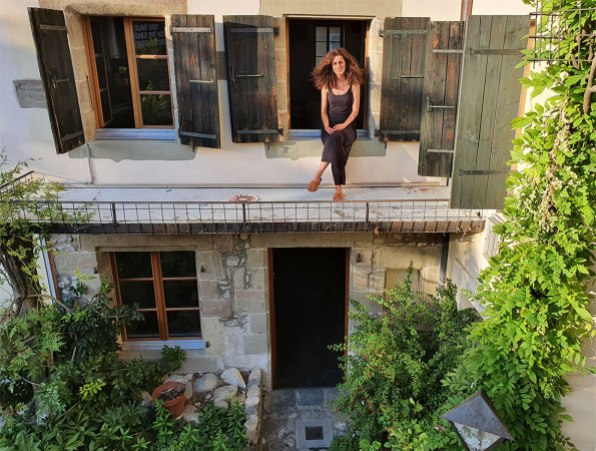
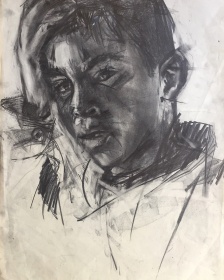
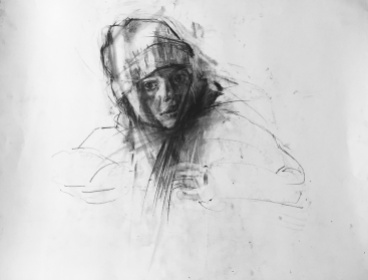
Valérie Horwitz, Mimiko Türkkan : Be like water
Libres. Libres comme l’eau qui coule, qui coule à travers nos corps. Nos corps de femmes. L’eau du monde.
Valérie Horwitz (http://valeriehorwitz.com/fr/accueil.html) et Mimiko Türkkan (https://mimiko.net/) viennent toutes deux de recevoir une bourse. Le prix Polyptyque (Marseille) pour Valérie Horwitz, une bourse du SAHA Sustainability Fund (Istanbul) pour Mimiko Türkkan.
Mais qu’est-ce qui lie les deux œuvres, les œuvres de ces deux artistes qui ne se connaissent pas (encore), et leurs projets respectifs ? Une certaine approche du corps, de la respiration, de l’ondulation, de l’énergie. De l’ « inergie » comme l’appelle Mimiko, par opposition à l’inertie.

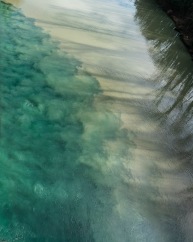
Après avoir intensément pratiqué la pole danse, la boxe et d’autres sports martiaux, Mimiko se tourne vers l’eau. Elle écoute Bruce Lee. Devenez de l’eau – oubliez la forme, et vous prendrez forme. Elle va au lac Baïkal, à Bali, à Ericeria au Portugal, à Venise, à Genève : à la poursuite de l’eau.
« Mon corps peut-il se mouvoir comme l’océan, s’interroge Mimiko ? Peut-il couler comme tel ? » Elle photographie et filme l’océan et s’y plonge par le surf. Elle ne coule pas, elle ondule. Elle ne se noie pas, elle se laisse porter.
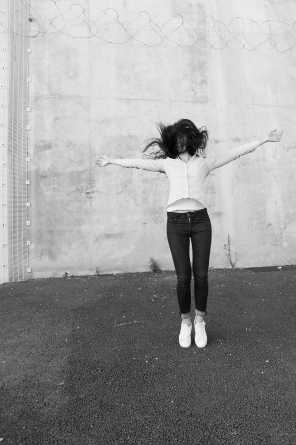
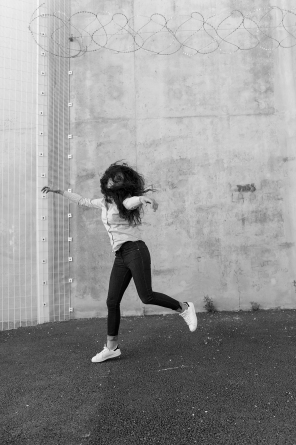
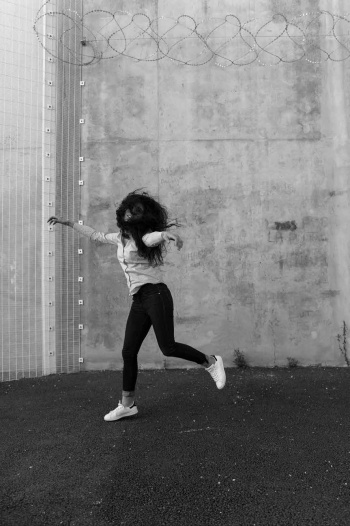
Valérie, elle, photographie de jeunes détenues mineures, à la recherche de leur liberté intérieure, et par cet intermédiaire, à la rencontre de la sienne propre. S., mineure incarcérée aux Baumettes, hésite. Peut-elle sortir de son corps ? Elle dit « T’approche pas trop ou je sors mes épines. » « Elle commence par respirer, encore ancrée dans le sol, explique Valérie. Elle prend une immense respiration, comme une élévation. Et puis tout d’un coup, elle se saisit de l’espace. Elle danse. Elle s’envole. Puis elle s’arrête. Elle coule. Elle reprend sa forme initiale. »
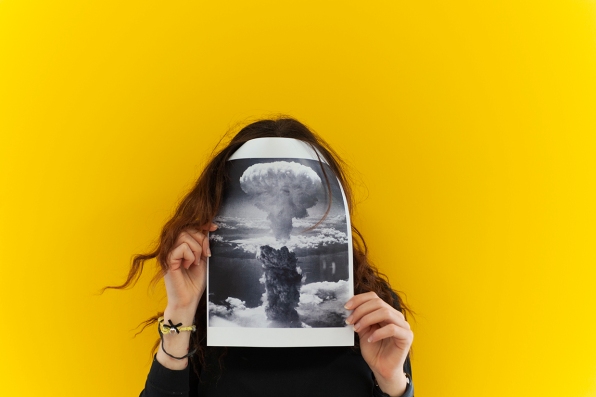
Une autre détenue. Un portrait. Un autoportrait, aussi. Une énergie atomique. Une énergie qui nous traverse. Qui nous transcende. Qui ne nous submerge pas, à condition de se laisser porter par elle.
« Nous n’avons à opposer à la mort et à la destruction que cette pulsion de vie, si forte, qui nous maintient »
« Nous n’avons à opposer à la mort et à la destruction que cette pulsion de vie, si forte, qui nous maintient »
Ce sont Joana Hadjithomas et Khalil Joreige qui parlent, en 2012, avec Quentin Mével, à propos de leur film Je veux voir.
Profondément émue par ce qui arrive au Liban et, entre autres, à Joana Hadjithomas, Khalil Joreige et leurs enfants (qui ont vu comme tant d’autres libanais leur appartement détruit, mais aussi leur atelier et leurs œuvres irrécupérables, qui ont vécu, surtout, l’angoisse d’avoir perdu Joana, par miracle saine et sauve) je me suis replongée dans la lecture du Cinéma de Joana Hadjithomas et Khalil Joreige, de Quentin Mével, et plus spécifiquement dans le chapitre consacré à Je veux voir, espérant y trouver, peut-être, quelques pistes de survie, à l’épouvante, à la mort (je viens d’apprendre le décès, parmi tant d’autres, d’un proche collaborateur de Saleh Barakat, qui était comme un frère pour Abdul Rahman Katanani) et à la destruction.
Les mots ci dessous sont des extraits de ce livre, des paroles de Joana et Khalil, qui résonnent étrangement aux lendemains de la destruction de Beyrouth, suite à ce qui m’apparaît aujourd’hui comme un vaste homicide par négligence.
Joana Hadjithomas et Khalil Joreige se reprojettent en 2006 : « La guerre éclate, une guerre d’une rare violence. Le pays est bombardé de façon incroyable. Des endroits sont rasés, totalement détruits. Nous étions à vif. On est allés sur les lieux : hallucinés devant le degré de destruction. Fallait-il filmer ou pas ? Que pouvions nous faire ? Comment témoigner ? »
Le film cherche cela aussi : regagner du terrain, là où la violence a tout détruit. Quand le poids du réel est trop important, la fiction peut-elle réapparaître à nouveau ? Voilà le type de question qui nous occupait. La question pour nous était : que peut-on montrer ? Nous étions sur une brèche, celle de la catastrophe. Nous avions besoin d’Histoire. »
Le besoin de dire, d’échanger des images sur les réseaux sociaux, de se parler, de témoigner, répond à cette nécessité de dire l’horreur du monde, chacun à notre manière, pour la rendre à tout le moins compréhensible, dicible, regardable. Moi qui propose en ce moment même dans ma galerie Analix Forever une exposition sur la guerre en Syrie, dans l’idée, dans l’espoir ultramince de pouvoir donner cette guerre à penser au monde et de contribuer ainsi à sa fin, je suis particulièrement sensibilisée par les artistes de cette exposition à la nécessité du témoignage. Et comme le dit Frédéric Detue dans Fiction vs témoignage (Acta Fabula, 2012, 14, 5) : « Loin de s’opposer au témoignage, la fiction peut le relayer ; la fiction étant le mode du récit qui convient le mieux à l’expression de la hantise. »
Pour l’instant, nous sommes tous hantés.

© Hala Ezzedine
Le dessin ci-dessus, qui me semble refléter cette hantise, est de Hala Ezzedine, une autre artiste de Beyrouth, qui devait venir en résidence à Analix Forever. Bientôt, je l’espère, ce sera possible.
FOCUS / PERFORMANCE « À L’ÉTUDE » DE NIKIAS IMHOOF

La performance « A l’étude » montre au public un pianiste au travail.
Elle propose une autre manière de vivre la musique que le concert ou l’enregistrement : en effet, elle dévoile ce qui lui est généralement caché et elle occulte ce qu’on lui montre habituellement. Pourtant, cette performance ne se veut pas un acte de négation du concert, elle cherche plutôt à opérer un vacillement dans la relation que le public entretient avec l’interprète : la performance enrichit l’expérience du public tout autant que celle du performeur. L’absence de concert déplace l’attention du spectateur sur le travail du musicien, travail généralement occulté au profit du concert-spectacle. Ici le travail devient le cœur de l’œuvre, il devient un acte pleinement signifiant et non plus un acte préparatoire en vue d’autre chose.
« Dans cette performance, je me propose de travailler uniquement des études »(et le répertoire pianistique en regorge : Chopin, Liszt, Debussy, Ligeti, …). S’ajoute ainsi à la réflexion sur le concert comme spectacle, celle de la place du spectaculaire (en l’occurrence de la virtuosité) dans le concert et plus généralement en musique. En effet, le genre des études, plus encore que tout autre genre musical, place l’interprète face à ses limites. L’interprétation en public d’un cycle d’études jette l’exécutant, comme un trapéziste sans filet, sous les yeux fascinés du public.
En revanche, en y intégrant l’erreur et la répétition, la performance permet d’appréhender la dimension spectaculaire sous un autre angle : celui de l’existence travailleuse qui rend possible le spectaculaire. L’ordinaire du travail se mue en extraordinaire par son exposition au public.
Cette « performance » – un terme intrinsèquement teinté d’une connotation « sportive – met aussi en scène l’aspect « combatif » de la musique, un aspect particulièrement important aujourd’hui.
« Non seulement j’ai pu entendre la musique mais surtout sentir, physiquement, l’énergie dégagée par la contrainte performative. » Barbara Polla
De la performance comme enfermement volontaire
Interpréter une pièce de musique, si l’on considère que cela équivaut à jouer la pièce du début à la fin, enferme l’interprète dans un lieu et une suite d’instants qu’il connait d’avance et qu’il fait défiler en lui. L’interprète libère la pièce qu’il interprète, lui donne vie, mais s’enferme lui-même dans le flux de la pièce. Une fois que le continuum de la pièce a débuté, l’interprète doit aller jusqu’au bout : le morceau règne sur l’interprète pendant toute la durée de son exécution. Tous les arts du temps enferment le spectateur dans une temporalité propre et un lieu d’exécution. Le spectateur devient otage du temps.
La performance en tant qu’art du temps, participe a cette catégorie de manière plus diffuse qu’un morceau de musique ou qu’un rôle théâtral par exemple. La performance consiste en un enfermement volontaire de la vie en tant que telle, d’une suspension de son cours naturel. Cet enfermement n’est pas du même type que celui du concert : le concert en tant qu’institution fait partie de la vie quotidienne, la performance offre un autre point de vue sur la vie (elle l’interroge au moins sur certains de ses aspects). La performance est probablement l’art le plus proche de la vie, tellement proche que l’on doit parfois choisir des conditions extrêmes pour l’en démarquer.
Je nomme conditions d’enfermement le protocole que le performeur s’astreint à respecter durant la performance et qui la démarque ainsi du quotidien (même quand la performance se proclame comme une portion de vie quotidienne). Peut-être nous arrive-t-il de respecter de telles conditions dans notre vie courante, mais si c’est le cas, ce respect ne relève pas d’un protocole préétabli et ne possède pas à première vue de portée symbolique (les ermites comme précurseurs de la performance ?). Ces conditions enferment le corps et dans une moindre mesure l’esprit dans le champ de la performance : elles sont le propos de la performance, sa tonalité, sa forme.
La performance met en scène la vie : elle transforme en art le corps en vie. Pourtant la performance n’est pas reproduction de la vie : le regard du spectateur vient modifier la vie (et la vie du pianiste est généralement très solitaire avant qu’il ne se retrouve soudain brutalement lâché dans la fosse du concert).
Les regards extérieurs vont avoir un impact sur ma manière de travailler, du moins au début (sur six semaines de performance cela va certainement évoluer, comme souvent le rapport au public, à l’instrument évolue au cours d’un concert). En tant que musicien il est très difficile de faire abstraction des oreilles qui nous écoutent et l’attention que nous porte une salle est très clairement perçue lorsque l’on est sur scène. Ces oreilles qui écoutent n’ont pas l’habitude d’écouter notre « travail », nos erreurs, nos progrès. Mais en présentant un travail et non un spectacle « fini », cette performance libère l’interprète du poids de l’œuvre.
On peut donc affirmer que cette performance enferme et libère à la fois. Elle libère l’interprète et le public de la prison temporelle de l’œuvre : l’interprète au travail n’est pas contraint d’exécuter l’œuvre en entier à chaque fois qu’il joue, il peut répéter des passages, s’arrêter sur une mesure, rejouer inlassablement un même trait. Elle montre la musique au quotidien.
Mais cette performance enferme ce qui auparavant était libre : le corps-esprit au travail. Cependant, dans le même geste qu’elle l’emprisonne, elle libère le travail de son aspect utilitaire et en fait un objet de pure contemplation.
Pour lire l’article en ligne, cliquez ici
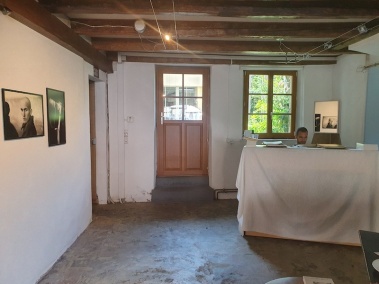
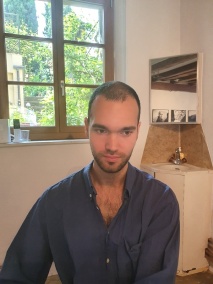
ENTROUVERT, du 15 mai au 25 juin à la galerie Analix Forever et dans les airs, avec Céline Cadaureille, Debi Cornwall, Angus Fairhurst, Laurent Fiévet, Shaun Gladwell, Valérie Horwitz, Nikias Imhoof, Stefan Imhoof, Abdul Rahman Katanani (dès le 13 juin), Ali Kazma, Rachel Labastie, Maïa Mazaurette, Sylvie Mermoud & Pierre Bonard, Robert Montgomery, Pavlos Nikolakopoulos, Jhafis Quintero, Klavdij Sluban, Laure Tixier, Mimiko Türkkan et Guillaume Varone. Performance de Nikias Imhoof, « À l’étude », du mardi au samedi, de 12h à 14h
ENTROUVERT dans lelittéraire.com

Avec des trésors d’ingéniosité, Barbara Polla et Elena Esen ouvrent une première phase de déconfinement. Exit le sommeil de l’art : celui-ci refait front et dresse le pont entre ce qui s’est passé, se passe et ce qu’il faut remettre en marche dans un temps de transition.
Pour cela, afin de casser la peur et l’angoisse et laisser la porte entrouverte à l’espoir, les galeristes ne laissent pas pour autant se perdre une crise qui ramène à d’autres enfermements que la Galerie a déjà présenté. D’où la présence de Jhafis Quintero et ce qu’il montre de la prison et ses fermentations et celle de Céline Cadaureille et sa “maison Boulet”.
A l’inverse — quoiqu’en restant dans la faille de la crise -, les galeristes ciblent aussi les forces de vie. Et l’érotisme fait bonne figure (euphémisme). Rachel Labastie, Maïa Mazaurette, Mimiko Türkkan, Guillaume Varone cultivent certains types de croissance et dépenses…
L’exposition reste donc toujours sur le fil et met en scène des situations qui rappellent le plaisir qui tue (mais d’une petite mort) et la douleur qui fait vivre.
Pour une fois, nous ne sommes plus bassinés avec la résilience. C’est reposant. Les galeristes réinventent des corps à corps, recréent la narration multiple et nue de l’existence voire sa poesis.
La fascination tient d’un tragique certain mais aussi de drôlerie faussement dérisoire dans un choc inédit de l’histoire.
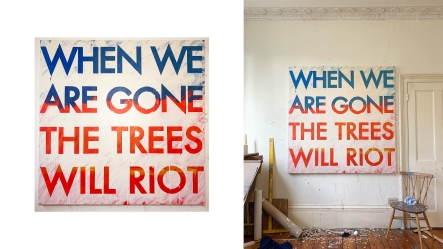
C’est pourquoi les artiste retenus soulignent bien des équivoques en diverses transgressions que résume l’un des artiste présenté : Robert Montgomery. Touché par le Covid 19 (dont il a guéri) pendant sa maladie par sa fenêtre, fiévreux, il voyait de sa fenêtre des arbres.
Il écrit alors et peint : “WHEN WE ARE GONE THE TREES WILL RIOT”.
Jean-Paul Gavard-Perret
Pour lire l’article en ligne, cliquez ici
ENTROUVERT, du 15 mai au 25 juin à la galerie Analix Forever et dans les airs, avec Céline Cadaureille, Debi Cornwall, Angus Fairhurst, Laurent Fiévet, Shaun Gladwell, Valérie Horwitz, Nikias Imhoof, Stefan Imhoof, Abdul Rahman Katanani (dès le 13 juin), Ali Kazma, Rachel Labastie, Maïa Mazaurette, Sylvie Mermoud & Pierre Bonard, Robert Montgomery, Pavlos Nikolakopoulos, Jhafis Quintero, Klavdij Sluban, Laure Tixier, Mimiko Türkkan et Guillaume Varone
ENTROUVERT – HALF-OPEN (ON THE AIR)
ENTROUVERT on the walls until June 25, and on the air too ! Between confinement and freedom, half-open : on air with Debi Cornwall, Valérie Horwitz, Nikias Imhoof, Rachel Labastie, Robert Montgomery & Guillaume Varone.
ENTROUVERT – HALF-OPEN

Laurent Fiévet, Tuesday, 2016, video loop, 232 min, video still © Laurent Fiévet
Group Show
ENTROUVERT
15.05 – 25.06
ENTROUVERT : on a peur, on espère. Incertitude. Espoir. L’art est espoir : il crée avec, et contre, le plus sombre en nous et y instille la lumière. Entre confinement et liberté, la porte de la galerie est entrouverte, le Covid19 est là, sur les murs, enfermé dans les images ; l’angoisse est palpable. Nous sommes à la « préhistoire d’un sourire » (Baricco).
Une exposition évolutive, dans les murs et hors les murs, dans la galerie et sur la toile, avec Céline Cadaureille, Debi Cornwall, Angus Fairhurst, Laurent Fiévet, Shaun Gladwell, Valérie Horwitz, Nikias Imhoof, Stefan Imhoof, Abdul Rahman Katanani (dès le 13 juin), Ali Kazma, Rachel Labastie, Maïa Mazaurette, Sylvie Mermoud & Pierre Bonard, Robert Montgomery, Pavlos Nikolakopoulos, Jhafis Quintero, Klavdij Sluban, Laure Tixier, Mimiko Türkkan et Guillaume Varone. ENTROUVERT renoue aussi avec la riche histoire musicale de la galerie et propose, symbole d’enfermement artistique volontaire, une performance de Nikias Imhoof, « À l’étude », qui se déroulera tous les jours de l’exposition, du mardi au samedi, de midi à 14h.
Et pour découvrir la contribution de Paul Ardenne à notre entrouverture, cliquez ici
HALF-OPEN: we are afraid, and swing between uncertainty and hope. Art is hope: it creates with, and against, the darkest in us and instills light in it. Between confinement and freedom, the gallery door is ajar, the Covid19 is there, on the walls, locked in the images; the anxiety is palpable. We are in the “prehistory of a smile” (Baricco).
An moving exhibition, inside and outside, on the walls and on the net. An evolving exhibition, inside and outside the walls, in the gallery and on the web, with Céline Cadaureille, Debi Cornwall, Angus Fairhurst, Laurent Fiévet, Shaun Gladwell, Valérie Horwitz, Nikias Imhoof, Stefan Imhoof, Abdul Rahman Katanani (from June 13), Ali Kazma, Rachel Labastie, Maïa Mazaurette, Sylvie Mermoud & Pierre Bonard, Robert Montgomery, Pavlos Nikolakopoulos, Jhafis Quintero, Klavdij Sluban, Laure Tixier, Mimiko Türkkan and Guillaume Varone. HALF-OPEN also reconnects with the rich musical history of the gallery and offers, a performance by Nikias Imhoof, « À l’étude » becomes a paradigm for voluntary artistic confinement, which will take place every day of the exhibition, Tuesday to Saturday, from noon to 2 pm.

Klavdij Sluban, de la série Entre Parenthèses 1995-2001, Gélatino-Bromure d’argent sur Papier Baryté
La performance ? Le pianiste au travail. « À l’étude » : Nikias Imhoof va travailler uniquement sur des études, dans un riche répertoire allant de Chopin à Debussy, de Liszt à Ligeti. Une autre manière de vivre la musique qui dévoile ce qui est généralement caché : l’étude. Une performance qui enferme et libère à la fois : elle libère l’interprète et le public de la prison temporelle de l’œuvre : l’interprète au travail peut répéter des passages, s’arrêter sur une mesure, rejouer inlassablement un même trait. Elle enferme le « corps-esprit » au travail mais libère le travail de son aspect utilitaire et en fait un objet de pure contemplation.
The performance is about the pianist at work. “À l’étude“ : Nikias Imhoof will work exclusively on studies, in a rich repertoire ranging from Chopin to Debussy, from Liszt to Ligeti. “Study » is another way of experiencing music that reveals what is generally hidden. This performance encloses performance encloses and liberates at the same time: it frees the performer and the public from the temporal prison of the work and the performer at work can repeat passages, stop on a measure, tirelessly replay a single stroke. It imprisons the “body-mind” at work but frees work from its utilitarian aspect and makes it an object of pure contemplation.
Entrouverture dans le respect des recommandations sanitaires en vigueur : 3 visiteurs à la fois, distanciation, masques et désinfectants ad libitum.
La galerie est ouverte du mercredi au samedi de 13h à 17h30 et sur RV (barbara.s.polla@gmail(.)com), ainsi que du mardi au samedi de midi à 14h pour la performance de Nikias Imhoof. La galerie est aussi souvent ouverte le soir : musique, entrée libre, toujours aux mêmes conditions sanitaires.
D’autres entrouvertures seront annoncées ultérieurement, suivez nous sur @galerieanalixforever et http://www.analixforever.com

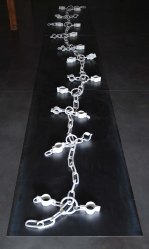
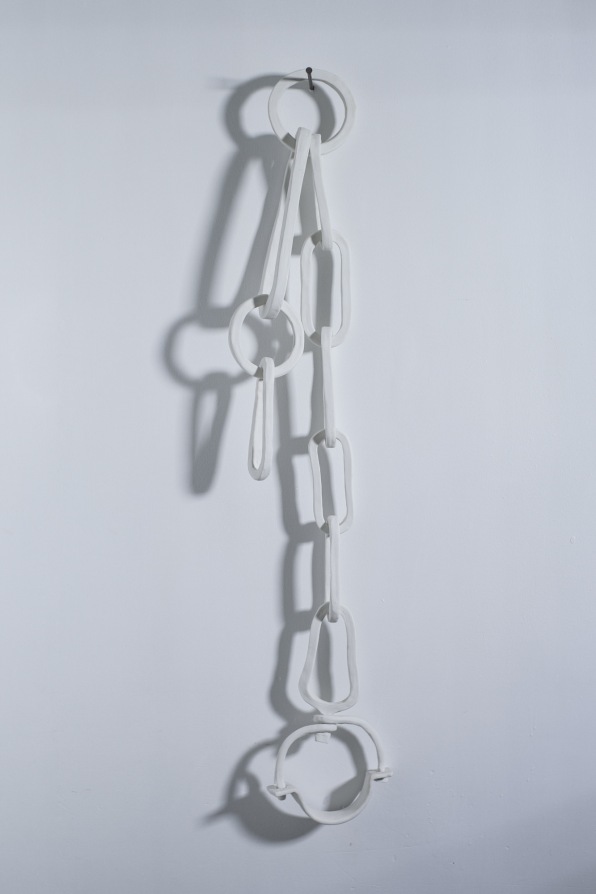
Céline Cadaureille, Maison Boulet, 2013, 60 x 40 x 70 cm et chaîne de 180 cm, Plaques en fer soudées et chaîne
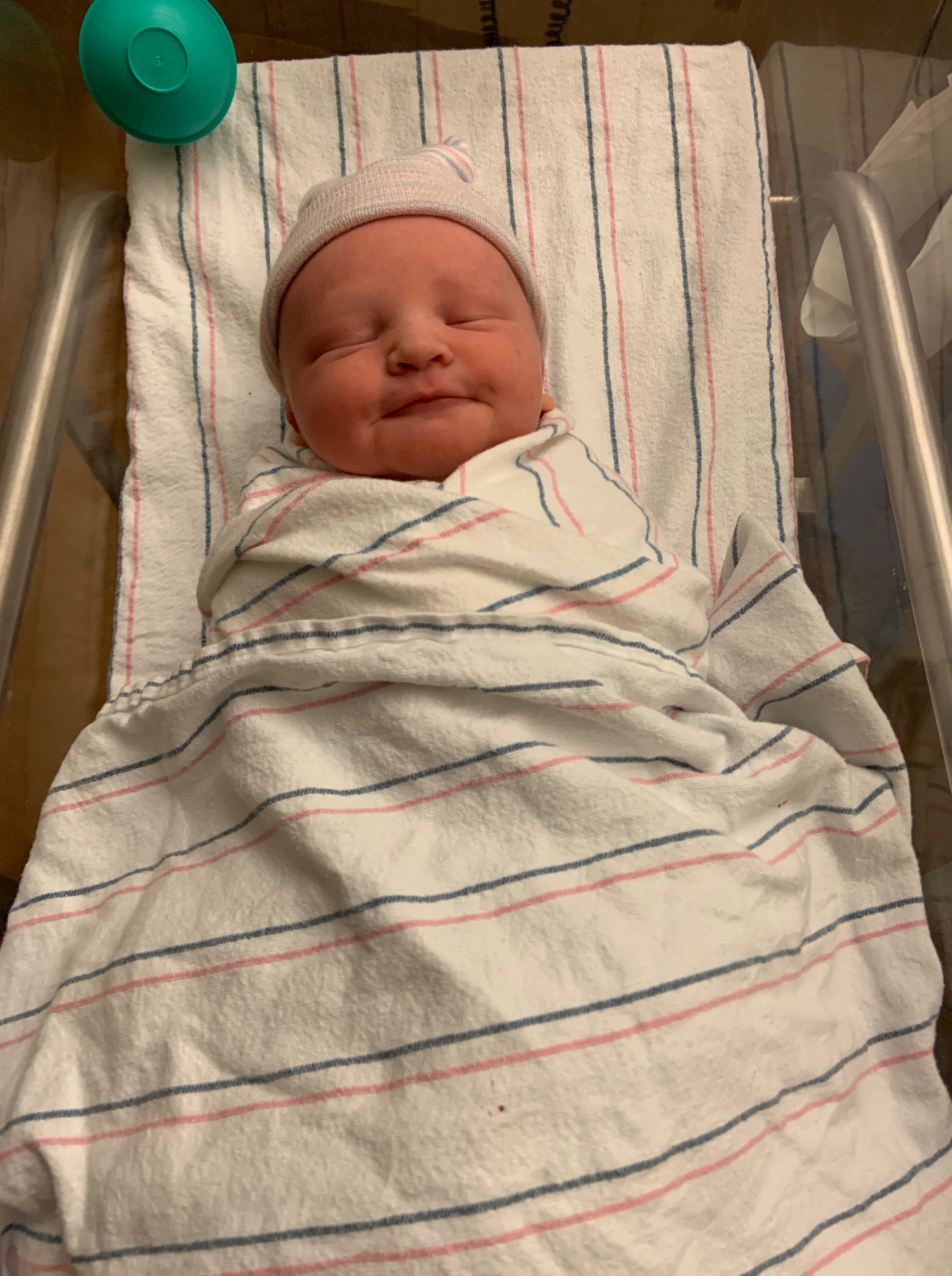
Carnet rose, welcome Henry McCay Moody
And congratulations to Mollie and Charlie !
Most beautiful smile !
 |
 Analix Forever's Blog